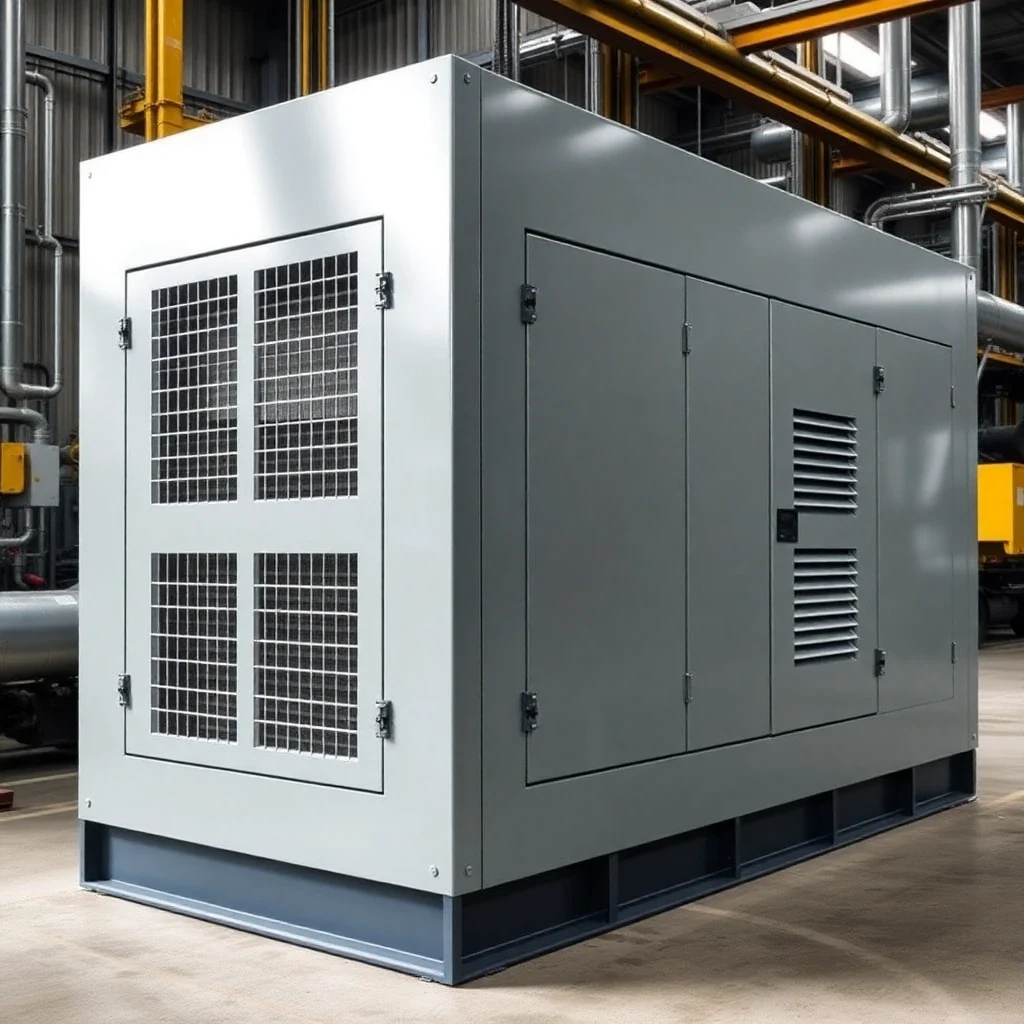
Acoustic Housing for Diesel & Gas Generators
Generator Acoustic Enclosure
Purpose-built acoustic housing for diesel, gas, and standby generator projects. The enclosure is configured around generator model, radiator airflow, exhaust route, service doors, cable entry, fuel-line path, and indoor or outdoor installation conditions.
For industrial equipment projects involving generators, compressors, pumps, fans, blowers, or machinery. This RFQ path is not for acoustic panels, foam, boards, home studios, recording booths, or server racks.
Product Gallery
4 photos · click to enlargeTechnical Specifications
Specifications are preliminary. Final parameters, materials, certificates, and acceptance criteria should be confirmed in the signed contract or approved technical proposal.
Applications
- Standby generator sets (data centres, hospitals)
- Prime power generators (remote sites, construction)
- Gas generator noise compliance
- Residential area generator installations
- Rooftop generator acoustic screening
- Industrial site noise ordinance compliance
- Emergency power systems in noise-sensitive buildings
Overview
Generator enclosures are custom projects because acoustic performance, cooling airflow, exhaust routing, weather exposure, service access, and installation space all interact. A safe quotation starts with the generator model and site layout rather than a fixed universal enclosure value.
Generator enclosure projects commonly combine acoustic louvers, ventilation silencers, acoustic doors, access openings, cable or fuel entries, exhaust routing, and customized dimensions around the generator package.
Project wording may call the same project a generator acoustic enclosure, generator enclosure, generator housing, generator canopy, generator cover, generator shelter, soundproof generator enclosure, sound proof generator enclosure, soundproof generator box, or outdoor generator enclosure. For quotation, HEMU treats these as technical assessments where airflow, exhaust, service access, installation environment, and noise target must be checked before a price comparison is meaningful.
The quotation review focuses on project fit: whether the generator is indoor or outdoor, how the radiator breathes, where exhaust leaves, which sides need service access, and what noise target the project must reach. Fixed attenuation, capacity range, weather rating, hazardous-area scope, and certification details are confirmed in the technical proposal for the selected project.
For best quotation accuracy, send generator model drawings, radiator airflow direction, exhaust arrangement, site photos, available installation space, target noise level, and any local compliance requirement that the enclosure must support.
Key Features
Generator-Specific Layout
The enclosure is planned around the generator model, radiator face, exhaust side, control panel, lifting points, and service clearances.
Generator Enclosure Name Review
Terms such as generator enclosures, generator housing, generator canopy, generator cover, generator shelter, and soundproof generator box often point to the same purchase intent. The RFQ review turns the name into a checked supply scope: airflow, exhaust, doors, base, lifting, finish, shipping, and documents.
Airflow and Exhaust Coordination
Acoustic ventilation, louvers, and exhaust routing are reviewed together to reduce noise leakage while preserving cooling and service safety.
Outdoor Generator Enclosure Review
Outdoor generator enclosure projects add weather exposure, corrosion risk, drainage, base frame, cable and fuel entry, and lifting access to the normal airflow and exhaust review.
Typical Application
A common project is a standby generator near offices, residences, or plant rooms where service access and a controlled ventilation route must be preserved.
Quote Inputs Needed
Provide generator model, rated output, dimensions, radiator airflow direction, exhaust outlet location, service-door needs, and site photos.
Knowledge Topics
Related guides cover generator enclosure ventilation, soundproof box layout basics, and what to confirm before ordering a generator acoustic enclosure.
Planning Guide
Generator Acoustic Enclosure RFQ Checklist
Generator noise-control quotations need both acoustic and mechanical inputs because cooling airflow, exhaust routing, service access, and weather exposure affect the enclosure design.
Generator model and airflow
Send the generator model, rated output, dimensions, radiator side, intake and discharge direction, exhaust location, and control-panel position.
Indoor or outdoor installation
Confirm weather exposure, corrosion risk, drainage, base frame, available clearance, lifting path, and whether the enclosure is installed in a room or outdoors.
Noise target and compliance
Share the boundary or operator noise target, measurement position, local noise limit, operating schedule, and the nearest noise-sensitive area.
Soundproof box quotation scope
If you compare a generator canopy, generator housing, generator cover, generator shelter, or soundproof generator box with a custom generator acoustic enclosure, confirm whether louvers, silencers, doors, base frame, exhaust parts, finish, shipping format, and documentation are included.
Related Products
Compare related enclosure options before sending your RFQ.
Related Planning Guides
Use these guides to prepare equipment data and project requirements before quotation.
Common Questions
Common quotation questions for comparing fit, included items, and next steps.
What is a generator soundproof enclosure?
It is a custom acoustic housing for a diesel, gas, or standby generator, designed around noise control, cooling airflow, exhaust routing, service access, and installation conditions.
What details are needed before quotation?
Provide generator model drawings, rated output, dimensions, radiator airflow direction, exhaust route, site photos, service access needs, and the project noise target.
How does ventilation affect generator enclosure design?
Ventilation is critical because the enclosure must reduce sound leakage while preserving radiator airflow, combustion air, heat discharge, and safe service access.
Is a sound proof generator enclosure different from a generator acoustic enclosure?
These terms often overlap. For industrial projects, the safer review is a generator acoustic enclosure because it checks airflow, exhaust, access, site exposure, and target noise point together.
Is a generator enclosure, housing, canopy, cover, or shelter the same product?
The names often overlap in search and supplier conversations, but the supply scope can differ. Confirm whether the project needs acoustic louvers, exhaust treatment, service doors, weather exposure review, base frame, lifting points, finish, shipping format, and documents.
Can the generator enclosure be used outdoors?
Outdoor use can be reviewed, but weather exposure, drainage, corrosion, base condition, cable and fuel entries, lifting, and service clearance must be confirmed before construction details are selected.
Is a fixed dB reduction guaranteed?
A fixed reduction should not be promised before review because the result depends on generator source noise, openings, airflow paths, installation space, and the measurement point.
Industrial Noise-Control RFQ
Send an RFQ for an industrial acoustic enclosure project
Use this form for equipment noise-control projects. A brief requirement is enough to begin; drawings, photos, airflow constraints, and target noise data can follow during the technical discussion.
This RFQ path is a fit for
Generator sets, air compressors, pumps, fans, blowers, HVAC equipment, and other industrial machinery.
Not for
Acoustic panels, foam, insulation boards, home-studio treatment, recording booths, or server-rack cabinets.
Industrial Acoustic Enclosure RFQ
The product type is pre-filled. Share the equipment, approximate dimensions, target noise level, or project country when available.
Ready to discuss your requirements?
Send equipment drawings, site photos, target noise level, and documentation requirements for quotation support.