Planning Guide
Acoustic Enclosure Planning Guide for Industrial Equipment
A practical guide for comparing acoustic enclosures for machinery, compressors, fans, pumps, generators, and equipment rooms.
Short Answer
An acoustic enclosure is usually the right option when a noisy machine or equipment skid needs source-level noise control while still allowing access, ventilation, cable routing, and maintenance.
When an acoustic enclosure is a good fit
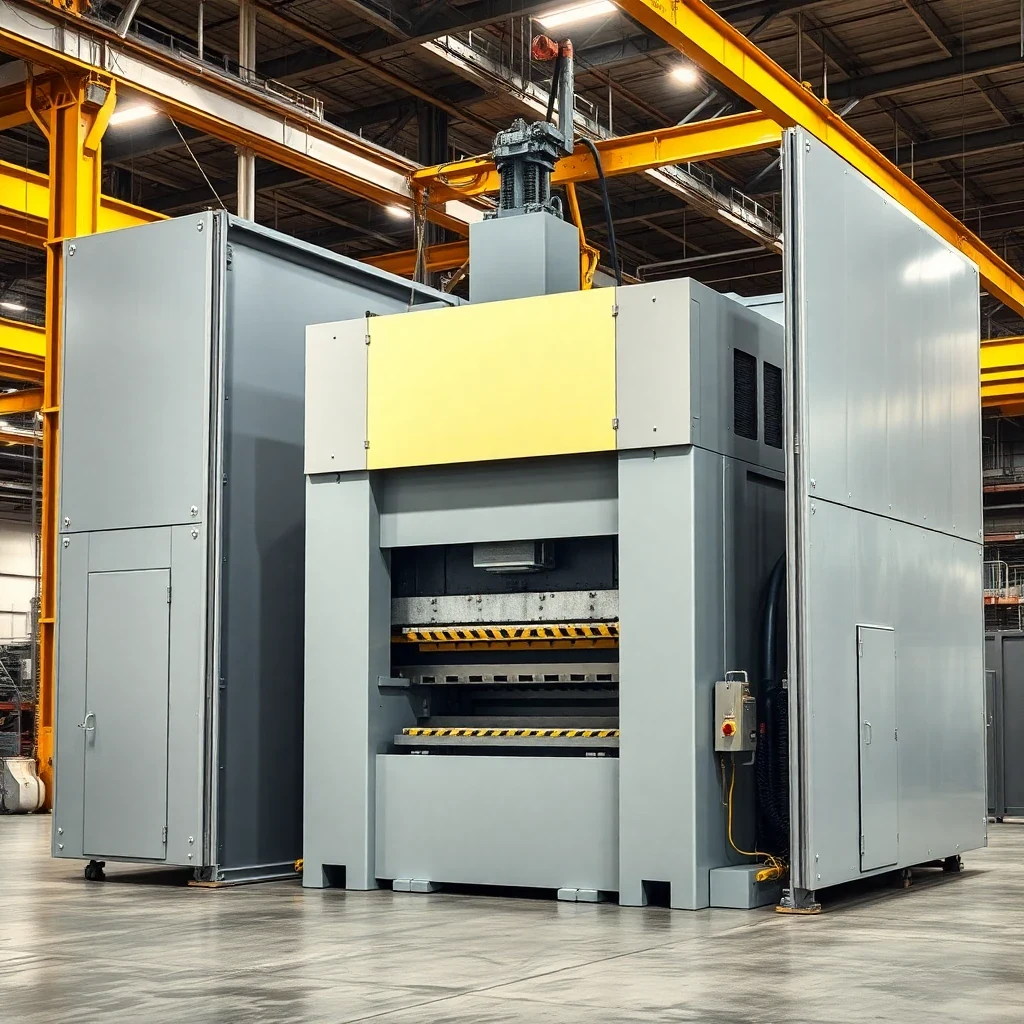
Acoustic enclosures are most useful when the noise source is concentrated around a machine, skid, generator, compressor, fan, pump, or equipment room. The goal is to control sound close to the source without blocking operation or service access.
- The noisy source has a clear footprint or equipment boundary.
- Operators still need doors, panels, windows, controls, or service openings.
- Cooling air, process air, ducting, exhaust, cable entries, or pipe entries must remain functional.
Data that changes the enclosure layout
The same product name can lead to very different enclosure designs. The layout depends on machine dimensions, noise source position, operating side, maintenance clearance, heat release, airflow path, and site limits.
- Equipment drawings, footprint, height, and moving-part clearances.
- Current noise condition, target measurement point, and working schedule.
- Site photos showing adjacent walls, walkways, crane access, and service zones.
Openings, ventilation, and service access
Openings are often the difference between a useful enclosure and a weak one. Doors, louvers, silencers, windows, removable panels, cable penetrations, and exhaust paths should be reviewed together.
- Do not treat ventilation as an afterthought; airflow and sound leakage must be reviewed together.
- Confirm the service side before door and removable-panel locations are fixed.
- Keep inspection windows and operator controls in the layout if daily operation requires them.
How to compare suppliers
A reliable supplier discussion should focus on how the enclosure fits the equipment and site, not only on a generic product photo. Ask how the supplier handles access, ventilation, penetrations, assembly, shipping, and documentation.
Selection Points
RFQ Checklist
| 1 | Machine or equipment type, model, dimensions, and layout drawings. |
| 2 | Current noise condition, target noise level, measurement distance, and working hours. |
| 3 | Required doors, removable panels, observation windows, cable entries, pipe entries, and duct openings. |
| 4 | Cooling airflow, heat release, exhaust route, or ventilation constraints. |
| 5 | Installation country, indoor/outdoor condition, timeline, and documentation requirements. |
Common Project Questions
Is an acoustic enclosure the same as a soundproof room?
Not always. An acoustic enclosure usually wraps a specific machine or equipment group, while a soundproof room may create a larger room-level space. The best choice depends on the source, access, and airflow.
Can an acoustic enclosure include ventilation?
Yes. Ventilation can be reviewed with acoustic louvers, duct silencers, airflow paths, and access openings so the enclosure does not block cooling or process needs.
What should be sent before quotation?
Send drawings, equipment dimensions, photos, target noise level, airflow or heat information, access requirements, and the installation environment.
Related Products
Related Solutions
Prepare a clearer acoustic enclosure RFQ
Send drawings, site photos, noise targets, access requirements, and airflow constraints for quotation support.
Send RFQ