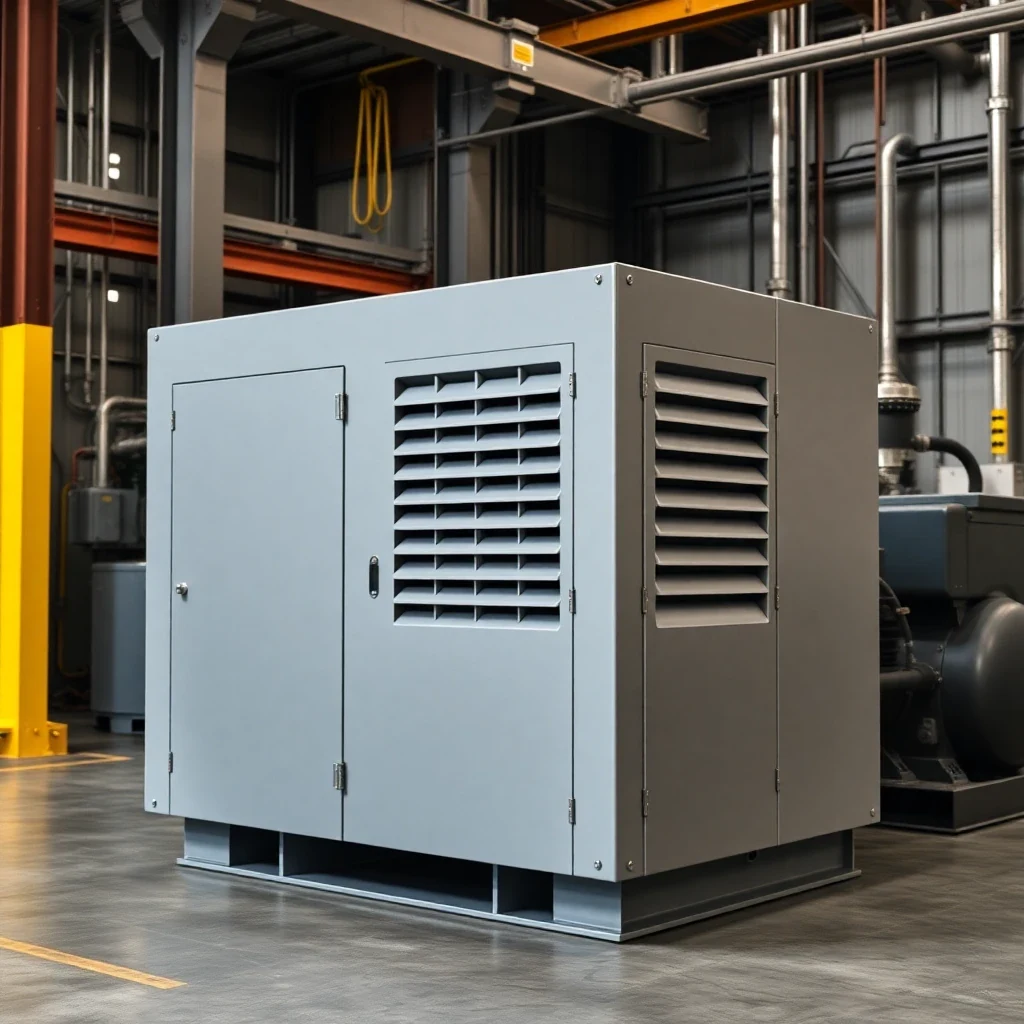
Compressor Sound Enclosure and Soundproof Box Planning
Air Compressor Acoustic Enclosure
Custom acoustic enclosure planning for reciprocating, rotary screw, and scroll air compressor installations. Project teams may describe the same need as a compressor sound enclosure, air compressor soundproof box, or outdoor compressor housing, but cooling airflow, service access, vibration, room layout, pipe routing, and site noise targets still need one technical assessment.
Product Gallery
5 photos · click to enlargeTechnical Specifications
Specifications are preliminary. Final parameters, materials, certificates, and acceptance criteria should be confirmed in the signed contract or approved technical proposal.
Applications
- Factory and workshop compressor rooms
- Occupational noise limit compliance
- Hospital and laboratory compressed air systems
- Food and pharmaceutical clean-air compressors
- Retail and commercial HVAC compressors
- Noise-sensitive residential area installations
- Marine and offshore compressed air systems
Overview
Air compressor acoustic enclosure design must preserve compressor cooling and maintenance access while reducing the noise path to nearby operators or occupied areas. Compressor model, heat release, intake and exhaust airflow, service side clearance, piping, drain routing, and vibration path all affect the enclosure design.
Project wording varies by market and project stage. Compressor sound enclosure, air compressor enclosure, soundproof compressor box, sound proof box for air compressor, and outdoor compressor enclosure can all describe a similar sourcing need, but the useful quotation scope is still the same: compressor data, airflow path, service clearance, openings, vibration path, and target receiver point.
Air compressors are common candidates for industrial soundproof rooms and acoustic enclosures. A useful RFQ should include product dimensions, operating purpose, door and window needs, acoustic target, indoor or outdoor conditions, and any modular or removable structure requirements.
Noise-reduction targets, compressor power range, panel build-up, and standard-compliance scope are confirmed during technical assessment from compressor data, site constraints, and the approved technical proposal.
For compressor rooms, blower rooms, and pump rooms, the first decision is whether to enclose the equipment source or treat a larger room-level boundary. A compressor acoustic enclosure normally fits when the compressor footprint, service side, airflow, pipe routing, and receiver point can be defined around the unit.
For quotation, send the compressor model, dimensions, cooling airflow requirement, service points, pipe and cable routing, room layout, target noise level, and photos of the installation area.
Key Features
Cooling Airflow First
The enclosure must preserve the compressor cooling path. Intake, discharge, and heat build-up are reviewed before acoustic treatment is selected.
Compressor Name and Scope Review
project wording such as compressor sound enclosure, air compressor enclosure, soundproof compressor box, and sound proof box for air compressor should be converted into a checked scope: compressor data, airflow, service doors, pipe and cable openings, vibration review, finish, shipping, and documents.
Maintenance Access
Filter replacement, oil servicing, belt inspection, drain access, and electrical service points should remain reachable after enclosure installation.
Vibration and Pipe Openings
Reciprocating compressors and connected piping may need vibration and penetration review to avoid structure-borne noise paths.
Compressor Room or Equipment Enclosure
If the noisy source is one compressor, an equipment enclosure may fit. If the whole room, multiple machines, or room ventilation is the issue, define the larger acoustic boundary first.
Outdoor Compressor Enclosure Review
Outdoor compressor projects need the same airflow and service checks plus weather exposure, drainage, installation clearance, and the routing of pipe, cable, and condensate connections.
Typical Application
A workshop or plant room has a compressor near operators or offices and needs a removable or serviceable enclosure around the unit.
Quote Inputs Needed
Send compressor model, dimensions, heat or airflow data, service-side layout, pipe and cable routes, photos, and target noise requirement.
Related Planning Guides
Use the acoustic enclosure planning guide, industrial RFQ checklist, and enclosure versus soundproof room comparison before sending compressor, blower, pump, or plant-room RFQs.
Planning Guide
Air Compressor Acoustic Enclosure RFQ Checklist
A compressor enclosure quotation should confirm cooling airflow, heat release, service access, pipe and cable openings, vibration paths, and whether the scope is the unit or the whole compressor room.
Compressor data
Send compressor type, model, dimensions, rated power if available, heat or airflow data, operating schedule, and the sides used for service.
Airflow and room layout
Mark intake and discharge paths, nearby walls, existing ventilation, room doors, walkways, and any risk of hot-air recirculation.
Openings and vibration
List pipe, cable, drain, duct, and control openings, plus vibration-isolation details if the compressor or connected piping transfers structure-borne noise.
Name and quotation scope
If the request uses compressor sound enclosure, air compressor enclosure, soundproof compressor box, or outdoor compressor housing, confirm whether louvers, access doors, removable panels, penetrations, finish, shipping, and documentation are included.
Target receiver point
State whether the target is the operator position, nearby office, property boundary, room exterior, or another measurement point.
Related Products
Compare related enclosure options before sending your RFQ.
Related Planning Guides
Use these guides to prepare equipment data and project requirements before quotation.
Common Questions
Common quotation questions for comparing fit, included items, and next steps.
Can an air compressor acoustic enclosure include ventilation?
Yes. Cooling airflow, acoustic louvers, duct silencers, heat discharge, and service access should be reviewed together before the enclosure layout is fixed.
Should I enclose the compressor or soundproof the whole compressor room?
Use an equipment enclosure when the compressor source and service boundary are clear. Consider room-level treatment when multiple machines, room ventilation, or occupied space must be inside the acoustic boundary.
Is a compressor sound enclosure different from a soundproof compressor box?
The terms often overlap. For an industrial compressor project, compare suppliers by the confirmed scope: cooling airflow, service access, pipe and cable openings, vibration path, finish, shipping format, and project documentation.
Can an air compressor acoustic enclosure be installed outdoors?
An outdoor installation can be reviewed when the enclosure layout accounts for compressor cooling, heat discharge, maintenance access, weather exposure, drainage, and the site routes for pipe, cable, and condensate connections.
What information is needed for a compressor enclosure quote?
Provide compressor model, dimensions, cooling or heat data, service side, pipe and cable routes, room layout, site photos, target noise point, and operating schedule.
Why are fixed noise-reduction values not listed?
The result depends on compressor source noise, openings, airflow, room reflections, vibration paths, and the measurement point, so performance should be confirmed by technical assessment.
Ready to discuss your requirements?
Send equipment drawings, site photos, target noise level, and documentation requirements for quotation support.