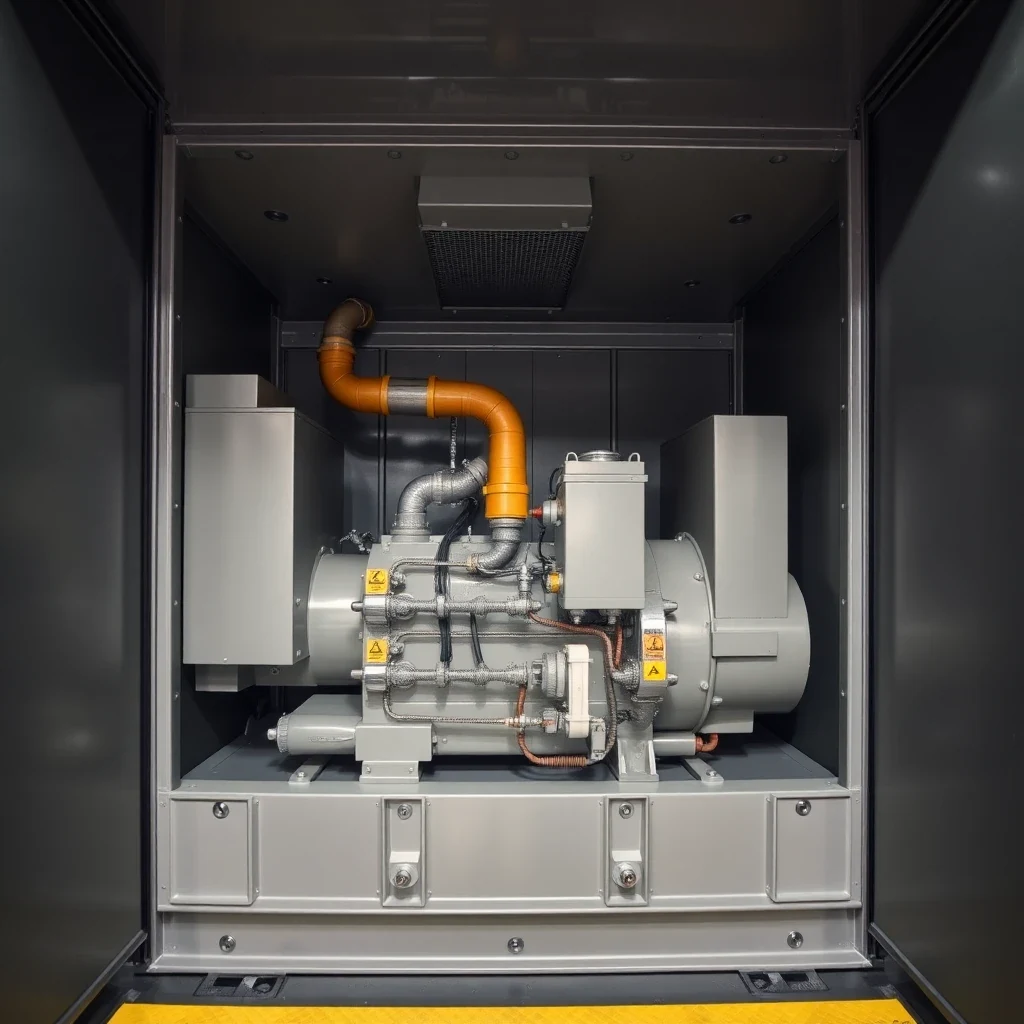
Generator Ventilation
Generator Acoustic Enclosure Ventilation Checklist
A practical checklist for generator enclosure projects where airflow, exhaust, weather exposure, service access, and acoustic treatment must be reviewed together.
Short Answer
Generator acoustic enclosure ventilation should be planned before price comparison. The radiator intake, hot-air discharge, combustion air, exhaust outlet, acoustic louver, silencer route, and service side all affect whether the enclosure can reduce noise without overheating the generator.
Why ventilation decides the enclosure layout
A sound proof generator enclosure is not only a noise barrier. It also has to keep the generator breathing, cooling, exhausting, and serviceable. If the airflow route is wrong, the enclosure may become quiet on paper but unusable on site.
- Identify radiator intake and discharge sides before fixing the enclosure footprint.
- Keep hot-air discharge, combustion air, and exhaust routing separate in the RFQ discussion.
- Review acoustic louvers or ventilation silencers where large openings are needed.
- Treat generator housing, canopy, cover, shelter, and soundproof box requests as ventilation projects when the generator is enclosed around the radiator or exhaust route.
Radiator airflow and hot-air discharge
The radiator path is usually the first layout constraint. The supplier needs to know the radiator face, airflow direction, clearance around the discharge side, and whether hot air can recirculate near walls or other equipment.
- Send generator drawings or photos that show radiator direction and service panels.
- Mark nearby walls, fences, roof structures, doors, and other equipment.
- Avoid placing acoustic treatment where it blocks required cooling air.
Exhaust route and silencer space
Exhaust is both a heat path and a sound path. The route, outlet direction, silencer space, roof or wall penetration, and rain protection should be checked before included enclosure items are compared.
Outdoor generator enclosure planning
Outdoor generator enclosure projects may need weather exposure, drainage, corrosion, base frame, lifting, access clearance, and cable or fuel-line entries confirmed in addition to ventilation and noise-control details.
Why naming changes the ventilation risk
A generator cover or canopy may sound simpler than a generator acoustic enclosure, but the airflow risk can be the same when the design surrounds the radiator, exhaust, or service side. The RFQ should state whether the project expects rain protection, acoustic reduction, full enclosure, or a housing with treated air paths.
Selection Points
RFQ Checklist
| 1 | Generator model, rated output, dimensions, radiator side, and cooling-air direction. |
| 2 | Exhaust outlet location, silencer requirement, discharge direction, and roof or wall penetration details. |
| 3 | Indoor or outdoor location, weather exposure, base condition, drainage, clearance, and site photos. |
| 4 | Service doors, control-panel side, cable entry, fuel-line path, lifting limits, and assembly restrictions. |
| 5 | Target noise level, measurement point, operating schedule, destination country, and documentation needs. |
Common Project Questions
Can a generator acoustic enclosure reduce noise without blocking ventilation?
Yes, but the airflow path must be reviewed with the acoustic treatment. Louvers, silencers, discharge paths, and service openings should be part of the layout, not late additions.
What is different about an outdoor generator enclosure?
Outdoor projects add weather exposure, drainage, corrosion, base, lifting, access, cable entry, and fuel-line conditions to the normal airflow, exhaust, and acoustic review.
Should I ask for a standard soundproof generator box?
A standard size may fit simple projects, but many industrial generator installations need custom review because radiator direction, exhaust outlet, access, and site limits vary.
Does a generator canopy need the same airflow review as an enclosure?
It should be reviewed when the canopy or housing changes radiator airflow, hot-air discharge, exhaust routing, or service clearance. A simple weather cover may be different, but an acoustic canopy still needs ventilation checks.
Related Products
Related Solutions
Prepare a clearer acoustic enclosure RFQ
Send drawings, site photos, noise targets, access requirements, and airflow constraints for quotation support.
Send RFQ