Chamber Comparison
Semi-Anechoic vs Fully Anechoic Chamber: Planning Comparison
A procurement guide for project teams deciding whether a semi-anechoic or fully anechoic chamber better fits an acoustic measurement project.
Short Answer
A semi-anechoic chamber usually keeps a reflective floor for equipment or vehicle support, while a fully anechoic chamber treats more surfaces for a free-field style test environment. The right choice depends on the test method, object size, floor loading, background noise target, and working volume.
Start from the test purpose
The chamber choice should follow the measurement task, not only the chamber name. Product noise testing, vehicle or equipment tests, small-device testing, and research work can require different floor, absorber, and room conditions.
- State the product or source to be tested and the expected operating position.
- List the measurement method, standard, or internal procedure that must be supported.
- Confirm whether the test object needs a solid floor, turntable, fixture, duct, or cable penetration.
Semi-anechoic chambers
Semi-anechoic designs are often considered when the test object needs a hard floor or practical support surface. Confirm floor loading, working area, absorber layout, door size, and background noise target.
Fully anechoic chambers
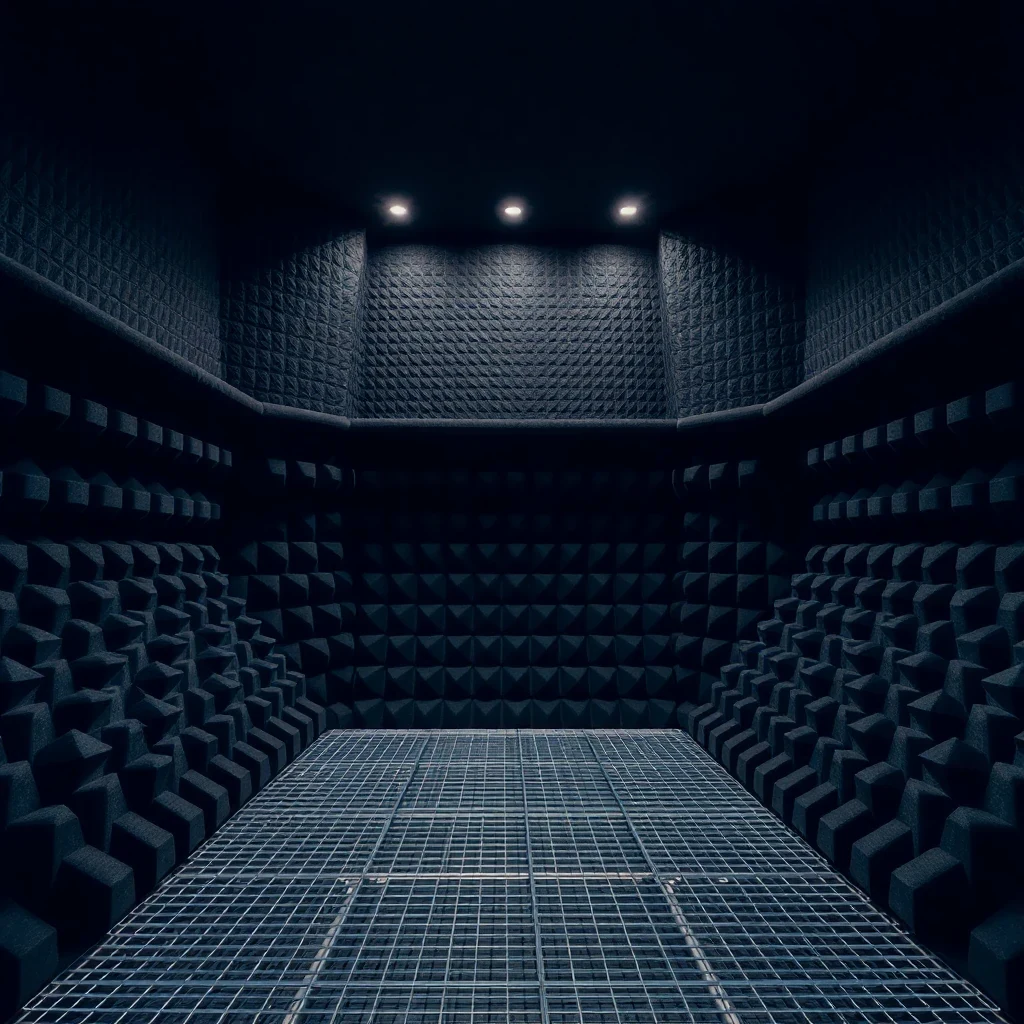
Fully anechoic designs usually require more surface treatment and may add floor-grid or support considerations. The RFQ should confirm working volume, cut-off expectation, access, safety, and installation constraints.
Do not publish standards without evidence
Standards, background noise, cut-off frequency, and qualification claims should be tied to supplier documents, customer requirements, or approved test evidence before being used as public claims.
Selection Points
RFQ Checklist
| 1 | Test object size, weight, operating condition, measurement method, and target standard or internal procedure. |
| 2 | Room size, working volume, floor loading, door size, fixture, turntable, and access needs. |
| 3 | Background noise target, frequency range, cut-off expectation, ventilation, lighting, and safety requirements. |
| 4 | Cable, duct, exhaust, pipe, or equipment penetrations and whether they need acoustic treatment. |
| 5 | Documentation, acceptance method, installation site, destination country, and timeline. |
Common Project Questions
Is a semi-anechoic chamber cheaper than a fully anechoic chamber?
It can be, but cost depends on size, absorber system, floor loading, door, HVAC, background noise target, instrumentation needs, and installation conditions.
Which chamber is better for equipment testing?
It depends on the equipment size, weight, floor requirement, operating mode, and measurement method. A semi-anechoic chamber is often reviewed when a hard floor is required.
Can HEMU claim compliance with a chamber standard on the website?
Only when supplier documents, customer requirements, or test evidence support the claim. Otherwise the standard should be treated as an RFQ input.
Related Products
Related Solutions
Prepare a clearer acoustic enclosure RFQ
Send drawings, site photos, noise targets, access requirements, and airflow constraints for quotation support.
Send RFQ