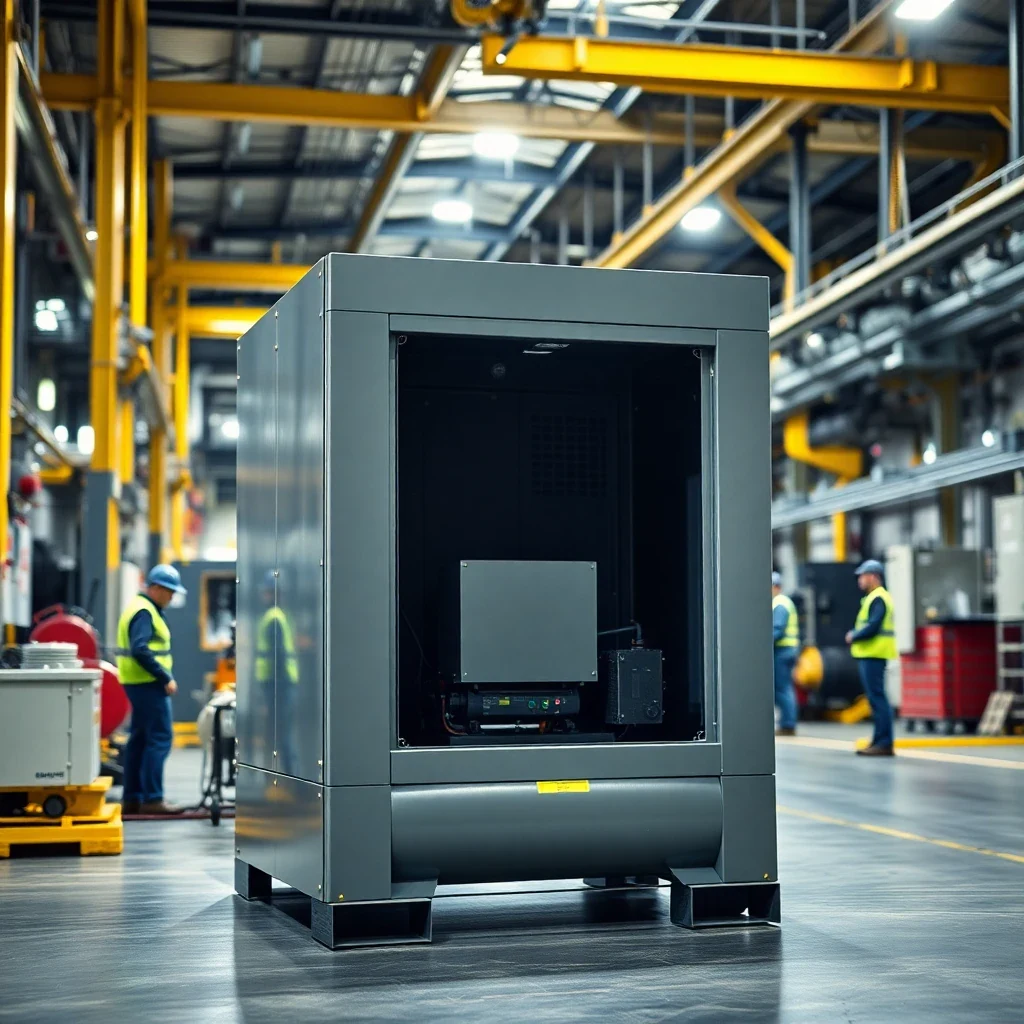
Ventilation Design
Acoustic Enclosure Ventilation Design for Industrial Equipment
A buyer guide for projects where cooling air, exhaust, process airflow, or room ventilation must be treated without creating major sound leakage paths.
Short Answer
Acoustic enclosure ventilation should be designed as part of the noise-control layout. Intake, discharge, pressure drop, heat load, silencers, louvers, openings, and maintenance access all affect the final enclosure.
Why ventilation changes acoustic performance
Every opening can become a sound path. Ventilation design has to move air while controlling leakage through intake, discharge, louvers, ducts, exhaust routes, and service openings.
- Large free openings usually need acoustic treatment or layout control.
- Cooling airflow should be checked with the equipment duty, heat release, and operating schedule.
- Pressure drop and recirculation risk should be discussed before the enclosure structure is finalized.
Information that helps the first review
The supplier needs enough mechanical information to avoid guessing. Send heat load, airflow requirement, fan or radiator data, duct size, allowable pressure drop if known, and photos of nearby walls or equipment.
Common ventilation options
Industrial acoustic enclosures may use acoustic louvers, lined plenums, duct silencers, exhaust routing, removable panels, or room-level ventilation coordination. The correct option depends on the source and site.
Do not isolate ventilation from access
Air paths often share space with doors, removable panels, windows, cable entries, pipe entries, and maintenance routes. Layout review should keep these requirements together.
Selection Points
RFQ Checklist
| 1 | Equipment type, dimensions, heat load, airflow requirement, operating duty, and site photos. |
| 2 | Intake, discharge, radiator, exhaust, duct, or process-air direction. |
| 3 | Nearby walls, ceiling, fences, ducts, other equipment, and possible recirculation points. |
| 4 | Access doors, removable panels, cable entries, pipe entries, and service clearances. |
| 5 | Target noise point, measurement distance, documentation needs, and destination country. |
Common Buyer Questions
Can ventilation be added after an acoustic enclosure is designed?
It can be revised, but it is better to include ventilation early because large openings can change the acoustic layout, pressure drop, and equipment cooling.
What is an acoustic louver used for?
An acoustic louver helps air pass through an opening while adding acoustic treatment. It still has to be sized and positioned for the project airflow.
Do all acoustic enclosures need forced ventilation?
No. The choice depends on heat load, equipment duty, enclosure size, natural airflow, process needs, and site conditions.
Related Products
Related Solutions
Prepare a clearer acoustic enclosure RFQ
Send drawings, site photos, noise targets, access requirements, and airflow constraints for engineering review.
見積依頼を送信